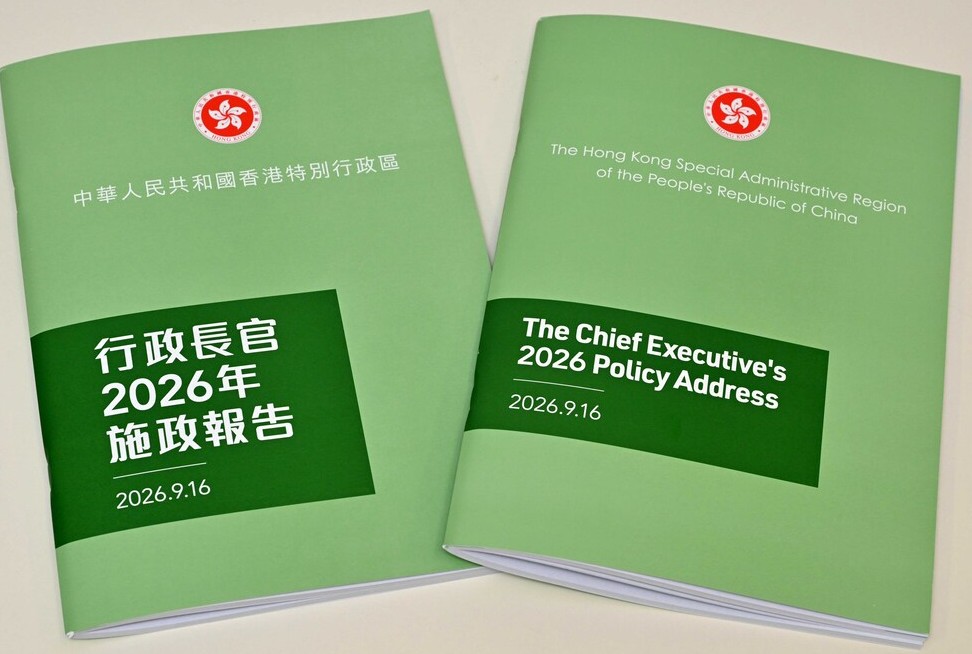
Hong Kong Chief Executive John Lee delivered his fifth Policy Address on 16 September 2026, outlining a strategic agenda aligned with the National 15th Five‑Year Plan and Hong Kong’s own First Five‑Year Plan (2026–2030). Framing the moment as a “bright new chapter,” the Government set out measures to drive high‑quality development and improve people’s well‑being.
Key initiatives include expanding the Northern Metropolis University Town, increasing research postgraduate places by 30 per cent, boosting scholarship quotas, and establishing five new academies for international talent in fields such as clinical trials, maritime services, legal training, intellectual property and policing.
To strengthen industry development, the Government will accelerate creation of an international gold trading market, explore tax concessions for gold and commodity activities, and announce new Renminbi‑denominated gold futures. Funding will be injected into the AI Subsidy Scheme, specialty insurance will be promoted, and emerging sectors such as commercial aerospace and low‑altitude economy will be supported.
Six special industry parks are being developed, alongside preferential tax rates of 5 per cent for selected enterprises. Hong Kong will also enhance its role in international mediation, intellectual property trading and global co‑operation, with new UN organisations and cultural and sports bodies establishing a presence in the city.

Hong Kong Financial Secretary Paul Chan delivered the 2026‑27 Budget in February 2026, highlighting new opportunities arising from the National 15th Five‑Year Plan and the country’s continued high‑standard opening‑up. He stressed the need to foster “new quality productive forces” and leverage Hong Kong’s global–Mainland connectivity and talent base to help enterprises expand into new markets.
Major innovation and technology measures include establishing the Committee on AI+ and Industry Development Strategy, advancing the Sandy Ridge data facility cluster, expanding AI training, accelerating digital transformation across government, and creating the International Clinical Trial Academy to support biomedicine internationalisation.
To drive new industrialisation, Hong Kong will set up its first national manufacturing innovation centre outside the Mainland and launch the New Industrialisation Elite Enterprises Nurturing Scheme, supported by infrastructure such as the Hetao Co‑operation Zone and San Tin Technopole.
Financial sector initiatives include promoting RMB internationalisation, securities market reform, enhanced tax regimes for family offices and funds, and licensing for digital asset service providers. A new Northern Metropolis Urban‑rural Integration Fund will support rural tourism.
Public finances have improved faster than expected, with a return to operating surplus in 2025‑26. To ease household pressures, allowances and deductions will rise from 2026/27. Chan concluded that Hong Kong must accelerate sustainable economic development and improve quality of life.
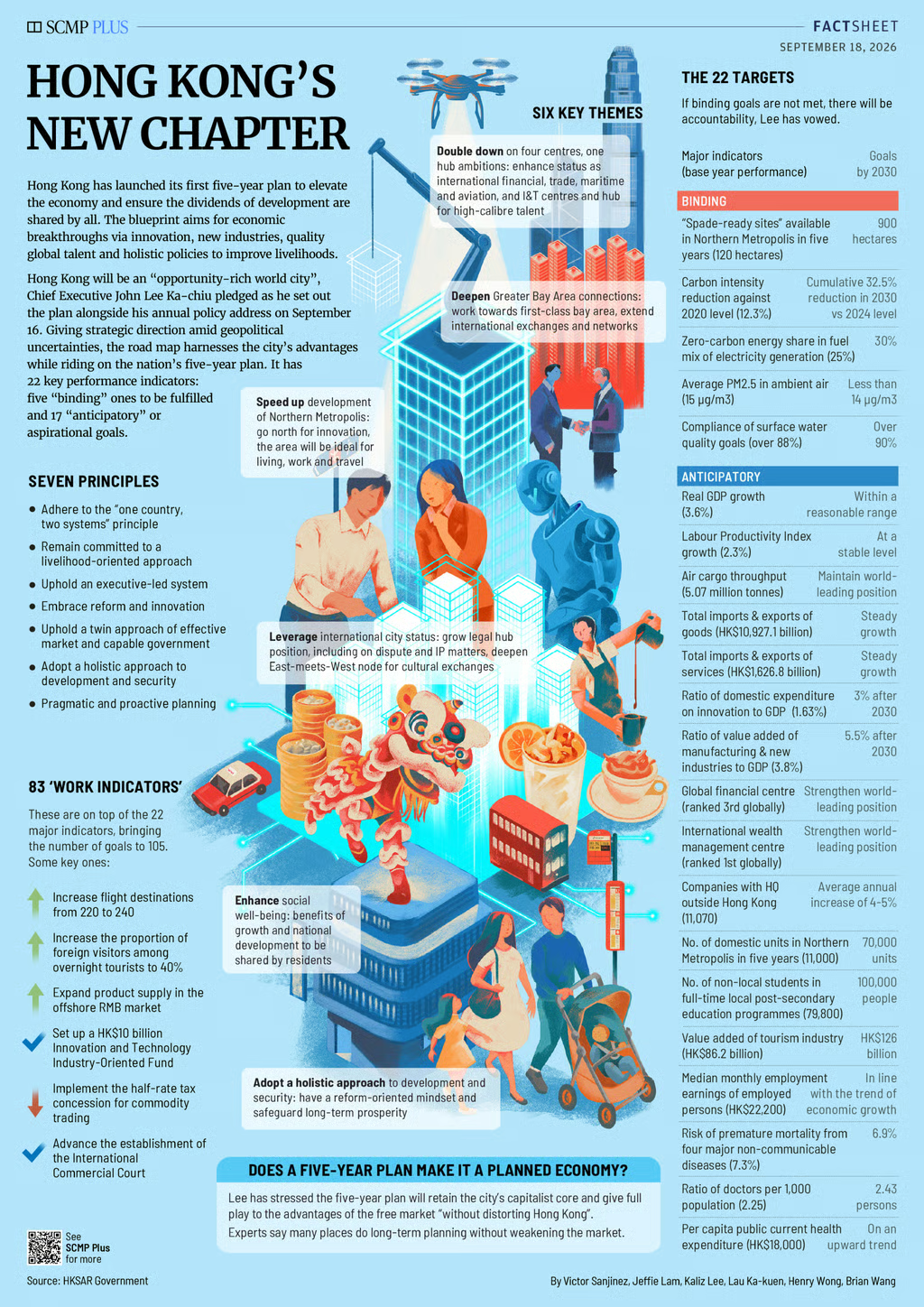
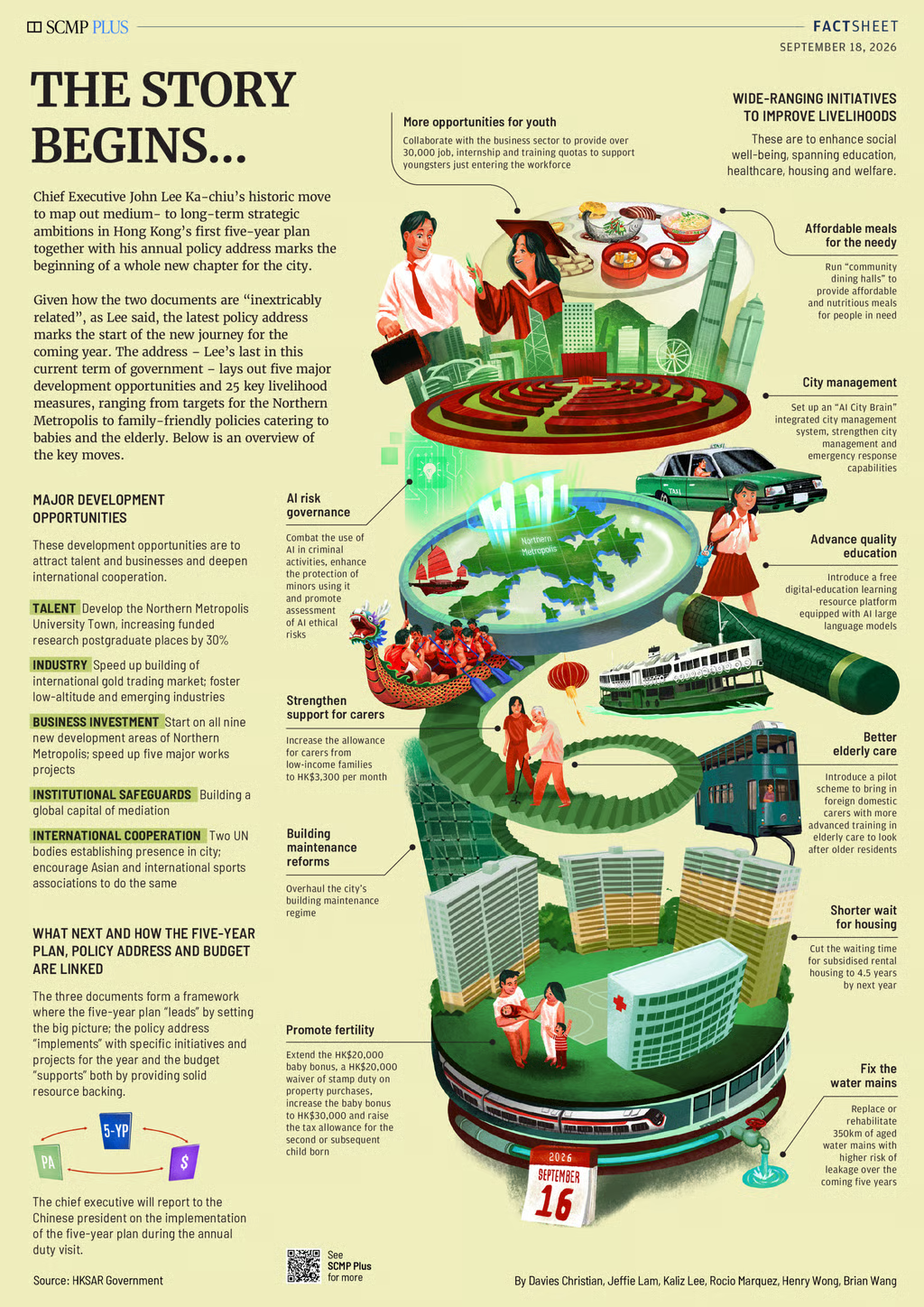
Hong Kong’s Government released its First Five‑Year Plan (2026–2030) on Wednesday 16 September 2026, marking a major step in aligning the city with national development strategies and strengthening executive‑led governance. The Plan aims to clarify Hong Kong’s development direction, optimise resource allocation, and enhance social well‑being, positioning the city as “a more attractive, vibrant and opportunity‑rich world city.”
The Plan outlines 105 indicators across governance, economic development, social protection and security. Key priorities include reinforcing Hong Kong’s roles as an international financial, maritime, trade and aviation centre, and accelerating development of an international innovation and technology hub supported by major I&T parks and five core research institutions.
A major focus is the Northern Metropolis, envisioned as a new engine for “new quality productive forces,” featuring university towns, industry clusters and integrated living communities.
Hong Kong will deepen integration with the Guangdong‑Hong Kong‑Macao Greater Bay Area, expand international collaboration, and strengthen social well‑being through improvements in education, health care, housing, elderly care and green transformation.
The Plan also emphasises a holistic approach to development and security, enhanced national security mechanisms, digitalised governance, and a structured implementation framework: “Five Year Plan leads, Policy Address implements, Budget supports.”